Resilience isn’t just about grit—it’s about design.
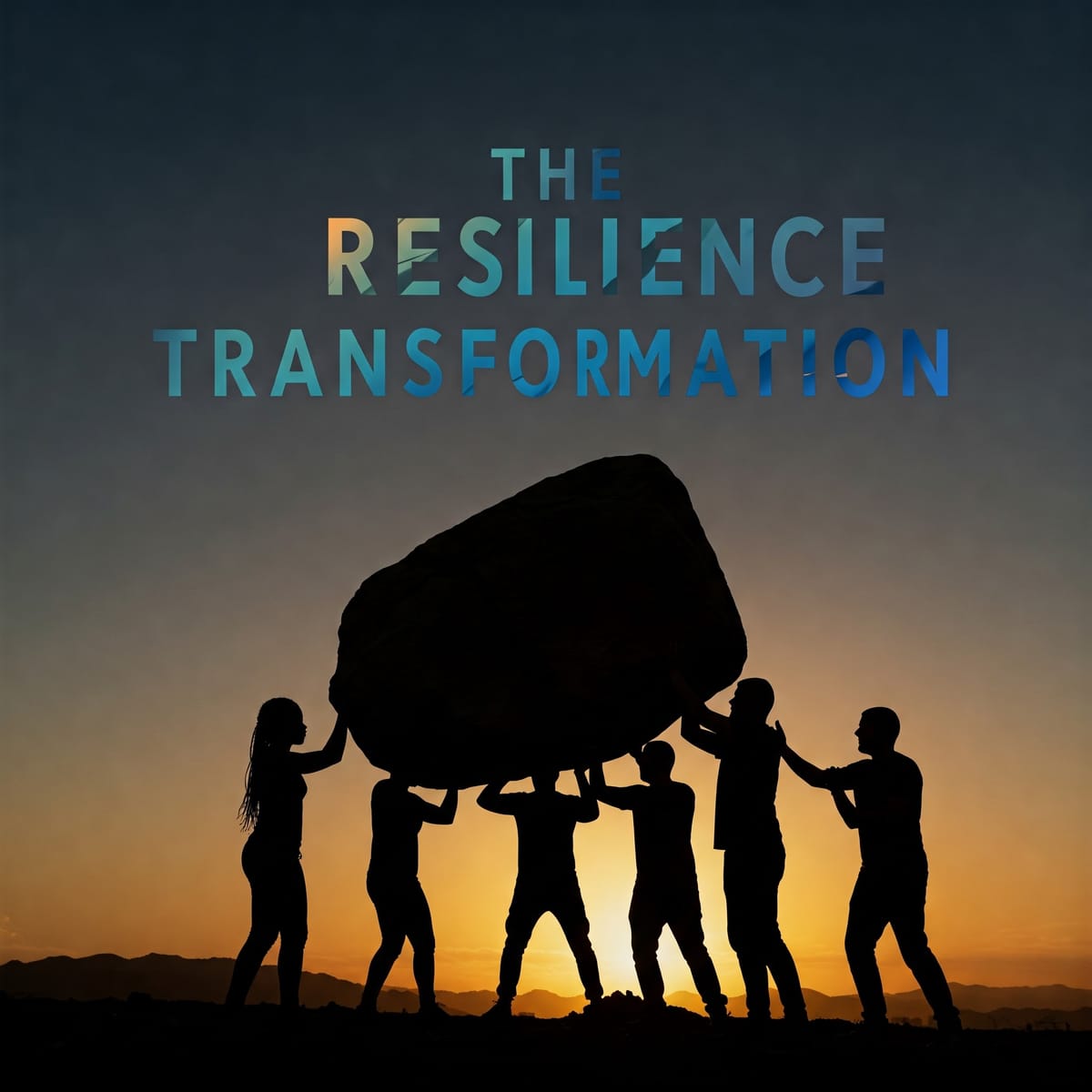
The Resilience Transformation
In my previous article, I explored how tariffs, inflation, and rising acquisition costs are reshaping fleet and asset strategies—and how these pressures underscore the need for truly resilient organizations. As we tackle these current challenges, there’s a compelling case for building organizational resilience—not just to manage today’s disruptions but to prepare for whatever comes next. Resilience isn’t just about reacting; it’s embedded in leadership behaviors, cultural norms, and the systems that support people under pressure.
This follow-up explores what happens inside the organization: how leaders can proactively design environments that absorb shocks, protect performance, and turn volatility into a competitive advantage.
In today’s high-pressure, high-uncertainty world, we’ve glamorized resilience as “toughing it out.” But neuroscience and organizational psychology offer a more strategic truth: real resilience isn’t reactive—it’s designed.
This article challenges the outdated narrative and reframes resilience as a leadership discipline—one built through planning, prevention, and systems that prioritize people and performance. Too often, we celebrate the firefighting and overlook the fire marshal who mitigates risk upstream. We reward urgency over foresight, and in doing so, we miss the opportunity to build truly resilient organizations.
Of course, even with planning, the unexpected will happen. No system eliminates all uncertainty, but resilient systems and cultures create the capacity to respond with clarity, agility, and purpose. Whether it’s a sudden tariff increase, geopolitical instability, or a public health crisis, resilient teams don’t just react—they adapt.
Resilience enables individuals and organizations to absorb shocks, maintain strategic focus, and emerge stronger. It’s not about avoiding stress—it’s about building the strength to move through it well.
In this context, well-being is no longer just a personal benefit. It’s a strategic lever in navigating today’s volatile and rapidly evolving world.
The High Cost of Neglecting Resilience
In a VUCA world—volatile, uncertain, complex, and ambiguous—resilience isn’t optional. It’s foundational. Without it, organizations face a slow erosion of their effectiveness.
Under prolonged stress, leaders become reactive. Teams lose direction. Burnout spreads. Innovation stalls. Morale dips. Reputation suffers. And the impacts aren’t just cultural—they’re measurable: lower productivity, rising turnover, and fractured strategic execution.
You may already be feeling this pressure from personal loss, financial instability, economic headwinds, or regulatory shifts like the end of the de minimis tariff rule. These aren’t just individual challenges. They’re organizational stress tests.
Without systems that support recovery, adaptability, and clarity, teams default to survival mode. Decision-making deteriorates. Engagement fades. The organization becomes vulnerable—not just to disruption but to stagnation.
Resilience isn’t a wellness program. It’s a performance strategy. It protects your ability to focus, innovate, and lead—especially when it matters most.
The Science Behind Resilience
Resilience isn’t a soft skill—it’s a strategic capability grounded in both neuroscience and organizational psychology.
From a neurological perspective, resilience is trainable. Through neuroplasticity, the brain can rewire itself in response to intentional practices like mindfulness, which strengthen areas responsible for focus, emotional regulation, and decision-making. These improvements in executive function help leaders remain calm and clear-headed under pressure.
Organizational psychology reinforces this at the team level. Studies show that psychological safety, a shared sense of purpose, and strong social support systems are critical to building team resilience. Research by Dr. Amy Edmondson at Harvard has shown that psychological safety isn’t just a cultural bonus—it’s a leading predictor of innovation, adaptability, and performance. Google’s Project Aristotle reached the same conclusion: after analyzing more than 180 teams, it found that psychological safety—not technical skill or intelligence—was the single most important factor in team effectiveness.
Key takeaway: Resilience isn’t innate—it’s a capability leaders create by reducing friction, fixing broken systems, and building cultures that support trust, learning, and sustained performance under pressure.
Why Well-Being Drives Better Decisions'
In high-pressure environments, decision-making is a leader’s most valuable currency—and well-being directly affects its quality.
When leaders and teams are mentally or physically depleted, judgment suffers. Sleep deprivation, for instance, impairs working memory, weakens impulse control, and slows cognitive processing. Meanwhile, mental health challenges like anxiety and depression can distort perception, increase risk aversion, or lead to impulsive overcorrection—all of which undermine effective decision-making.
This isn’t theoretical. Research from Korn Ferry and Deloitte confirms that executive well-being is strongly correlated with better decisions, stronger leadership performance, and improved organizational outcomes.
Key takeaway: Resilient teams don’t just feel better—they make better choices faster and under pressure. Protecting well-being is protecting the quality of your decisions.
What Resilient Leaders Do Differently
Resilient teams don’t happen by chance—they’re shaped by leaders who intentionally design for performance under pressure.
It starts with realistic expectations. Resilient leaders don’t glorify burnout. They manage workloads to balance urgency with sustainability. They foster psychological safety by encouraging open dialogue, providing consistent feedback, and building trust through transparency.
They also understand that culture isn’t passive—it’s protected. When toxic behavior surfaces, resilient leaders respond swiftly. They reinforce values through action, not just words.
Clear roles, regular recognition, and shared goals help teams stay focused and motivated. A strong social connection acts as a buffer against stress, while autonomy gives people the confidence and flexibility to navigate complexity without constant oversight.
Above all, resilient leadership begins with self-awareness. Leaders who model healthy boundaries, acknowledge stress, and prioritize recovery permit their teams to do the same.
Key takeaway: Resilient leaders don’t just manage people—they shape systems, model behaviors, and create the conditions for others to succeed.
The Barriers—and How to Eliminate Them
Most organizations support resilience in theory but unintentionally block it in practice.
They reward nonstop availability, tolerate chronic overwork, and operate with systems that deprioritize rest, recovery, and mental health. Even high performers wear down when their well-being isn’t structurally supported.
Compounding this are suboptimal processes—inefficient workflows, unclear roles, and outdated systems that increase friction and fatigue. When people are constantly compensating for broken processes, it not only drains energy but also elevates risk.
And the risk isn’t just emotional—it’s physical. In many operational environments, poor process design compromises safety, increasing the likelihood of accidents and lost workdays. Resilience demands more than mental stamina; it requires a physically safe environment built on reliable, consistent process execution.
The fix isn’t about adding more—it’s about removing friction. Normalize rest. Simplify decision paths. Prioritize process safety and clarity to reduce overload, prevent injuries, and create space for recovery.
Key takeaway: True resilience is only possible in environments that protect people mentally, physically, and operationally.
Building a Resilient Organization
Resilience isn’t a standalone initiative—it’s an organizational operating system.
High-performing, resilient organizations embed support, flexibility, and adaptability into how work gets done. They don’t rely on individual heroics; they build systems that anticipate stress, respond to change, and protect long-term performance.
They reward learning over perfection, embrace iteration, and align teams around a shared mission. In these environments, employees understand not only the “what” and “how” of their roles but also the “why,” which drives engagement and purpose.
Work-life integration isn’t a perk—it’s a structural tool for sustaining energy, focus, and high-quality output. When people are supported holistically, they show up with more creativity, clarity, and capacity to lead through disruption.
Key takeaway: Resilient organizations aren’t just adaptable—they’re intentionally designed to thrive under pressure without sacrificing people or performance.
The Resilience Transformation
Resilience is no longer just about bouncing back—it’s about bouncing forward.
Modern organizations must be designed to grow stronger under pressure, not just survive it. Resilient companies don’t wait for recovery; they build the capability to adapt in real time, absorb disruption, and emerge ahead of the curve.
They innovate when others stall, retain top talent when uncertainty peaks, and outperform in turbulent markets—not through luck, but through intentional design.
They’re not rigid. They’re responsive. They’re built to bend, not break.
Key takeaway: Resilience isn’t a trait—it’s a transformation. And in today’s world, it’s the edge that separates leaders from the rest.
Conclusion
Resilience is no longer a “nice-to-have” in leadership—it’s a non-negotiable.
In a world defined by volatility, constant disruption, and accelerating change, organizations that build resilience into their leadership, culture, and systems will lead. Those that don’t will struggle to keep up—or fail to recover.
This isn’t about soft skills. It’s about building durable, high-performing teams that can sustain excellence even under pressure.
The resilience transformation starts with leadership. And leadership starts with you.
Herbert Pruitt writes about leadership, strategy, safety, and performance at the intersection of operations and human potential for Miles of Leadership.